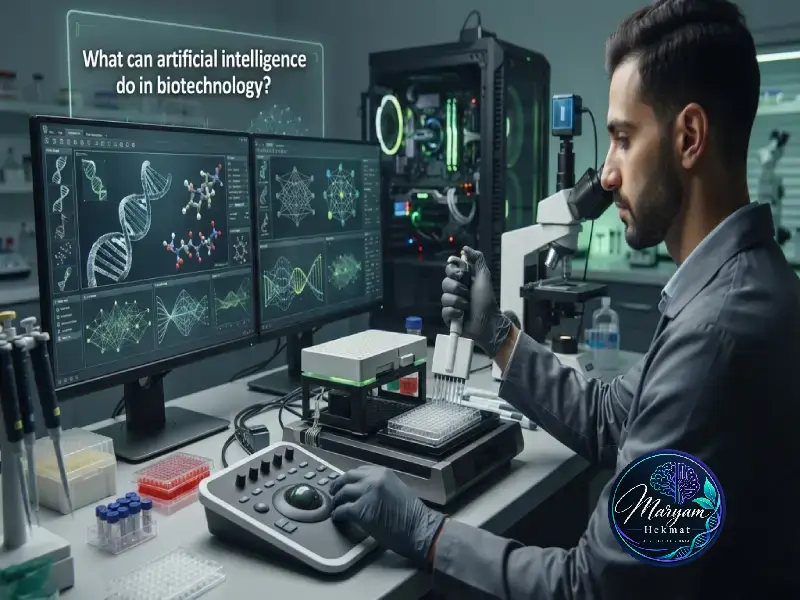
1. Biological Image Analysis Using Computer Vision
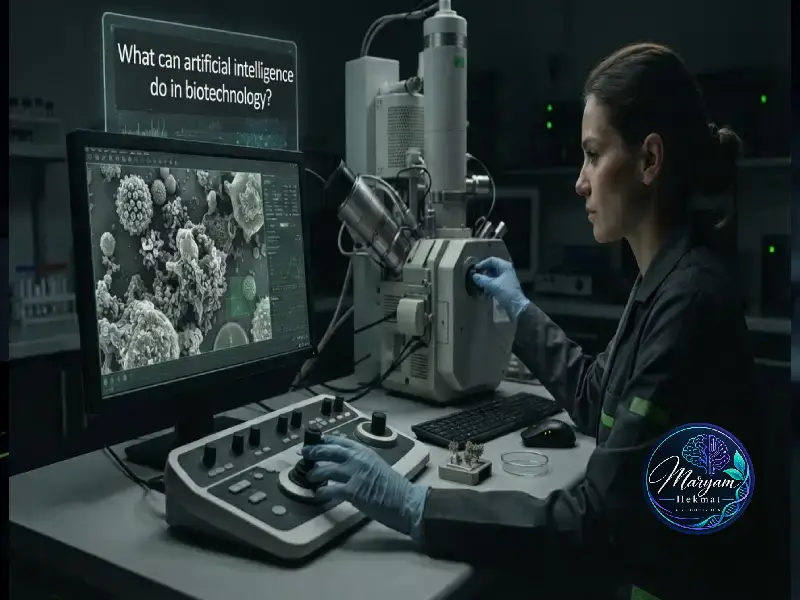
One of the most important applications of AI in biotechnology is biological image analysis. Microscopy, SEM, and FESEM images contain valuable information about cells, tissues, nanoparticles, and biological structures.
Computer Vision models can be used for:
Cell detection and counting
Image segmentation
Feature extraction
Morphological analysis
Identification of structural changes
Computer Vision technologies allow researchers to analyze large numbers of images more efficiently.
Learn more about Computer Vision technologies and their applications in AI-based image processing.
Example:
AI-based analysis of SEM/FESEM images can help extract morphological features of nanoparticles and biological structures using image processing and deep learning methods.
Related Project:
AI-Based SEM/FESEM Image Analysis
In this project, deep learning and image processing techniques are used to analyze SEM/FESEM images, extract morphological features, and explore automated analysis of microscopic structures.
2. Biological Data Analysis Using Machine Learning
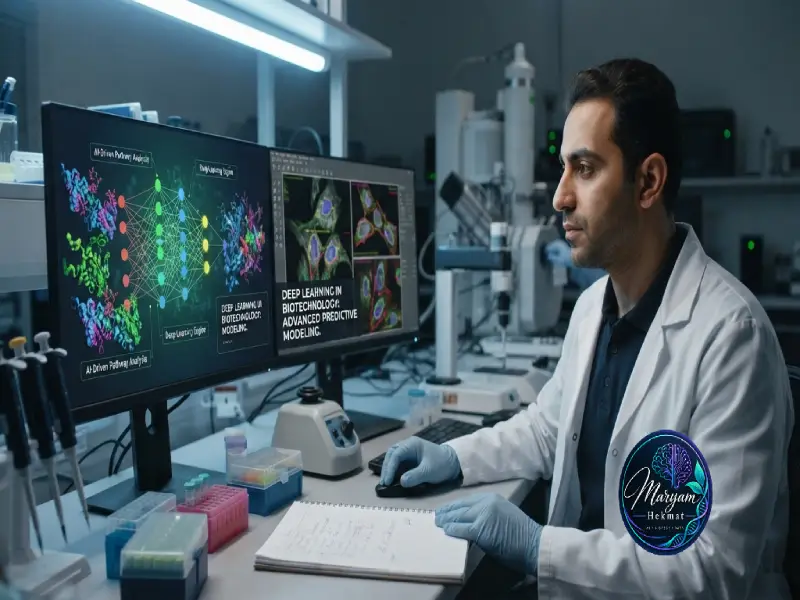
Biological datasets are often complex and contain multiple variables. Machine Learning algorithms can discover relationships and patterns that may not be easily detected using traditional approaches.
Applications include:
Biological sample classification
Prediction of experimental outcomes
Genetic data analysis
Pattern recognition in large datasets
Access comprehensive bioinformatics databases and computational tools for genomic and biological research:
National Center for Biotechnology Information (NCBI)
3. AI in Drug Discovery and Molecular Design
Drug development is a complex and expensive process. AI can assist researchers by analyzing molecular structures, predicting compound properties, and identifying potential candidates for further investigation.
However, AI predictions still require experimental validation and laboratory testing.
Explore the latest research at the intersection of Artificial Intelligence and Biotechnology through Nature Biotechnology, covering advances in machine learning, genomics, bioinformatics, drug discovery, and computational biology.
Current Applications of AI in Biotechnology
AI technologies have different levels of maturity. Some applications, such as microscopy image analysis, are already used in research laboratories, while others are still under development.
| Application Area | AI Application | Current Laboratory Usage |
|---|---|---|
| Microscopy Images | Cell detection, counting, and classification | Widely used in biological research |
| SEM/FESEM Images | Particle size, morphology, and structural analysis | Research use and automated image analysis development |
| Microorganism Detection | Identification of bacteria and growth patterns | Research and developing applications |
| Genetic Data Analysis | Pattern discovery and biological prediction | Used in bioinformatics research |
| Drug Discovery | Compound prediction and molecular analysis | Growing use in pharmaceutical research |
| Protein Design | Structure and function prediction | Advanced research field |
| Smart Laboratories | AI combined with robotics and automation | Still under development |
The Future of AI in Biotechnology
Future biotechnology laboratories may combine AI with robotics, sensors, and multiple biological data sources.
| Technology | Current Status and Future Direction |
|---|---|
| Computer Vision for Biological Images | Practical use in research |
| 3D Biological Image Analysis | Developing technology |
| Prediction of Cellular Response | Still challenging |
| AI-Powered Autonomous Laboratories | Future development area |
| Integration of Genetic and Imaging Data | Growing research field |
Conclusion:
Artificial Intelligence is becoming a powerful tool in biotechnology, helping researchers analyze complex biological data, improve laboratory workflows, and discover new opportunities in life sciences.
1. Will AI replace biotechnology researchers?
No. AI is a supportive tool that helps researchers analyze biological data more efficiently and accurately.
2. Is AI currently used in biological laboratories?
Yes. AI is used in image analysis, biological data processing, bioinformatics, and drug discovery research.
3. What is the role of Computer Vision in biotechnology?
Computer Vision helps analyze biological images, detect cells, classify samples, and extract important visual features.
4. Do researchers need programming skills for BioAI?
For developing AI models, skills such as Python, Machine Learning, and data analysis are important.
5. What are the main challenges of AI in biotechnology?
Limited high-quality data, model interpretation, and differences between laboratory conditions are major challenges.
6. Can AI create new drugs?
AI can support drug discovery by predicting promising compounds, but laboratory experiments are still required.
7. What career opportunities exist in BioAI?
BioAI creates opportunities in biological data analysis, medical AI, Computer Vision, and AI-driven research.

Leave a Reply